
Lawn Site Preparation in Brisbane for Turf Slabs and Artificial Turf
Lawn site preparation in Brisbane addresses dips and poor drainage before new turf goes down. Clearing, grading and hand finishing give the lawn an even base.
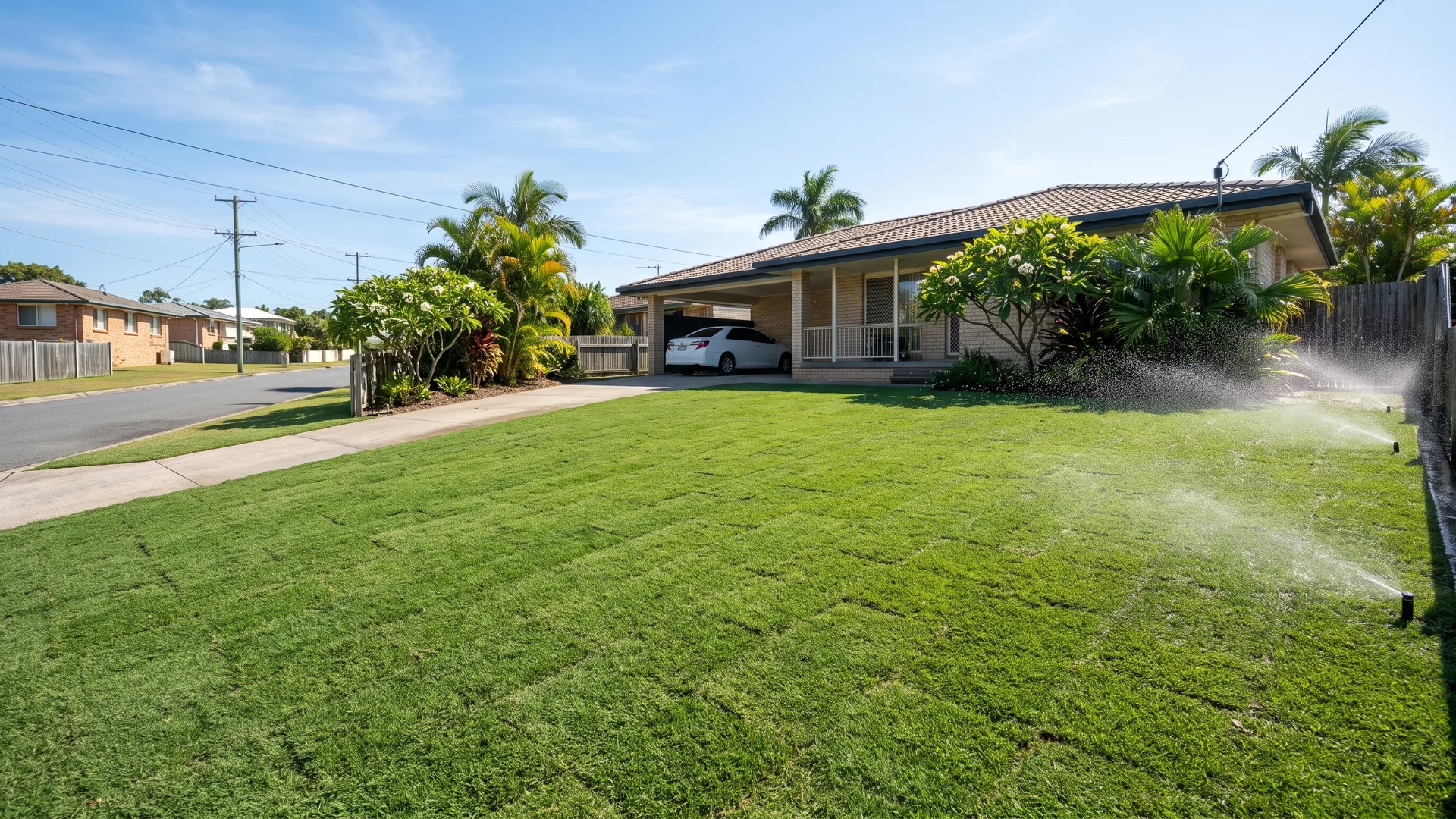
The ground beneath new turf affects how well it stays level, takes root and drains away from the house. A sunken middle can be caused by soft fill, buried rubbish or ground that was not graded. The installer can assess the cause on site and shape the base before fresh turf goes down.
What is included
- Old lawn and weed clearing Turf laid over living grass and weeds roots poorly and lets old growth push back through the joins.
- Soil levelling and grading A gentle fall away from the house stops water sitting against the slab or pooling in the middle of the yard.
- Hand finishing Machines get the shape right, then raking by hand removes the small bumps and hollows that show once turf is down.
- Soil improvement Compacted or poor soil gives roots little to grip, so the top layer is loosened or topped up where the yard needs it.
- Drainage and irrigation Where water needs a path out or a watering system goes in, a provider with the right licence class does that part.
How it works
-
Look at the yard
The installer works out where the sun and shade fall, how water moves across the ground and how machines can get in. Narrow side access on an older cottage block changes the tools used.
-
Clear the old surface
Dead lawn, weeds and rubbish come off. Weedy ground is treated with a non-selective herbicide so growth does not return through the new turf.
-
Level and grade
The soil is cut, filled and graded so the yard sits flat and sheds water away from the house.
-
Improve and finish by hand
Compacted soil is loosened, topsoil added where needed, then the surface is raked and rolled by hand until it is even.
-
Lay on a level pad
Turf slabs or synthetic grass go onto the finished base, so the lawn starts flat and has nothing to settle into.
Lawn site preparation in Brisbane: why new turf sinks
Turf sinks because of what is under it, not because of the grass. Soft fill left after building work, a trench that was backfilled without compacting, old tree roots rotting away and ground that was never graded all settle over time. The turf follows the ground down.
Die-off is a related problem. Turf laid on hard, compacted soil cannot push roots down, so it dries out and goes crispy within days even when it is watered. A previous contractor saying the ground was fine does not change that. Roots need loose, even soil to grip.
The installer confirms the cause on site, because the same sunken patch can come from fill, drainage or compaction, and each is fixed differently.
Clearing the old lawn and weeds
Old lawn comes off first. The installer either strips it or kills it, then removes the dead growth so it cannot rot under the new turf and leave a soft layer.
Weedy yards get a non-selective herbicide, a spray that kills any plant it touches. Couch, runners and broadleaf weeds left in the soil will push through the joins in new turf and spoil the look within weeks. Spraying and waiting for the weeds to die gives a cleaner result than turning them into the soil.
Rubbish, old edging and builders' leftovers are taken out as well. New builds and renovations often leave bare dirt mixed with offcuts and rubble, and that has to go before anything is levelled.
Levelling and grading so water leaves the house
Levelling removes the bumps and hollows. Grading adds a gentle fall so rain runs away from the house instead of settling against the slab or pooling in the middle of the lawn.
On a flat inner city yard, that fall may be slight. On a steep block, the work is about holding the soil in place and avoiding a slope that sheds water too fast. Machines do the heavy shaping, and then the surface is raked and finished by hand.
Inner Brisbane has older Queenslander homes and small cottage yards where side access can be narrow. When a large machine cannot reach the back, hand tools and compact equipment can help shape the base.
Drainage and irrigation done by the right licence
A yard that stays boggy after rain needs more than a grade. Where water has to be moved through pipes or a watering system has to be installed, that work belongs to a provider holding the right licence class for it.
The grading and soil work is the installer's part. Pipes and irrigation are done by the licensed provider, so each job is handled by the right hands and the finished surface still falls the right way.
Choosing Sir Walter DNA Certified Buffalo or another grass
Ground preparation changes with the grass. Sir Walter DNA Certified Buffalo copes with shade better than most turf and suits family yards where trees cast part of the day in shade. It still needs soft, even soil to root into.
TifTuf Bermuda handles full sun and dry spells, so it suits open backyards with little cover. Sir Grange Zoysia is another option where a fine, dense lawn is wanted.
Turf slabs cover ground quickly, which makes the base even more important. Every low spot beneath a slab shows through as a dip. Matching the variety to your sun, shade, dogs and kids comes before the soil work starts.
For an installer's quote covering ground preparation and turf laying, tell us what is happening in your yard and what you want the finished lawn to do.
Site preparation under artificial and synthetic grass
Artificial grass needs a base just as carefully made. Synthetic turf sits on a firm, compacted layer that is graded for drainage, and any low spot shows as a ripple on the surface.
Uneven synthetic grass can have a base that moved or washed out, while fading concerns the fibres above it. Laying new grass over it brings the same lumps back, so the old surface is lifted and the base is rebuilt first.
Site Preparation and Levelling options
- New build ground Bare dirt mixed with building rubble needs removal work before the soil can be shaped for turf.
- Sunken lawn A dip in the yard calls for a look at the ground beneath it before the surface is rebuilt.
- Narrow access A small inner city yard may need hand tools or compact equipment where a larger machine cannot reach.
- Artificial grass replacement Old synthetic grass can be lifted so the condition of the base underneath can be assessed.
Site Preparation and Levelling across Brisbane
Frequently Asked Questions
What should I ask an artificial turf company about site preparation and drainage?
How do I prepare for a turf installation in Brisbane?
What are common mistakes when laying turf and how can I avoid them?
Get it priced
Patchy, sinking or dead lawn? Tell us about your yard and get a clear price for new turf.
Tell us about your turf plans and discuss the work your yard needs.